In the highly regulated world of textile manufacturing, adherence to technical standards is not optional—it is the foundation of global trade. Two of the most important metrics for fabric durability are its abrasion resistance, as defined by ASTM D4966, and its surface stability, measured through a Pilling Resistance Test. Together, these two assessments provide a complete picture of how a fabric will age. For companies exporting to North America and other major markets, mastery of these testing protocols is essential for maintaining a competitive edge and ensuring customer satisfaction.
The Role of ASTM D4966 in Abrasion Testing
ASTM D4966 is the standard test method for the abrasion resistance of textile fabrics using the Martindale tester. This standard is particularly prevalent in the United States and is used to quantify a fabric’s ability to withstand surface wear. The ASTM D4966 protocol specifies the use of a Lissajous motion, the exact pressure to be applied (usually 9kPa or 12kPa), and the type of standard wool abradant cloth to be used. By following ASTM D4966, laboratories can provide a “Martindale Rub Count” that is recognized by retailers and regulatory bodies as a valid measure of durability.
The data generated by ASTM D4966 is vital for the upholstery and workwear industries. For example, a fabric intended for office chairs might be required to pass 50,000 rubs under the ASTM D4966 standard to be considered “commercial grade.” If a fabric fails this test, it could lead to massive financial losses through product recalls or contract cancellations. Therefore, using a high-precision Martindale machine that is specifically designed to meet ASTM D4966 requirements is a critical safeguard for any textile business.
The Importance of the Pilling Resistance Test
While abrasion resistance is about the fabric’s survival, the Pilling Resistance Test is about its appearance. Pilling is the formation of small fiber balls on the surface, which can make a relatively new garment look old and cheap. A Pilling Resistance Test is often conducted using the same Martindale apparatus, but the method differs. The goal is to simulate the lower-intensity, repetitive rubbing that occurs during normal wear. By grading a fabric’s resistance to pilling on a scale of 1 to 5, manufacturers can determine if a material needs further processing, such as anti-pilling finishes or specialized heat treatments.
Achieving Synergy Between ASTM D4966 and Pilling Resistance
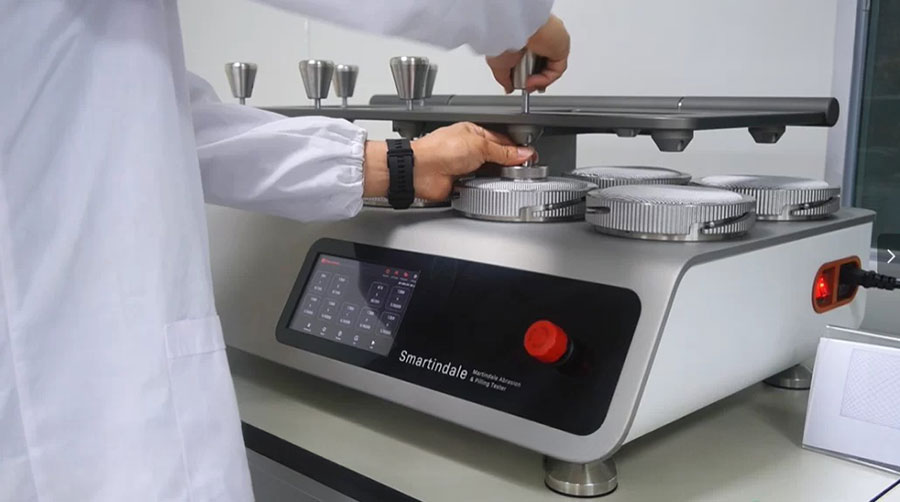
For a product to be truly high-quality, it must perform well in both ASTM D4966 and the Pilling Resistance Test. A fabric that is incredibly strong but pills easily is just as problematic as a fabric that stays smooth but wears through quickly. Modern testing machines, such as the ChiuVention Smartindale, allow technicians to perform both tests on a single platform. This integrated approach ensures that the data from the ASTM D4966 abrasion run and the Pilling Resistance Test can be analyzed together, providing a holistic view of the fabric’s lifecycle.
Precision Through Digital Technology
Meeting the strict tolerances of ASTM D4966 requires a machine with absolute mechanical precision. Older, gear-driven machines can suffer from vibration and pattern drift, which can lead to “false fails” or, even worse, “false passes.” The latest digital Martindale testers use dual-servo motors and sophisticated algorithms to ensure the Lissajous pattern is perfect every time. This precision is equally important for the Pilling Resistance Test, where the consistency of the rubbing is key to getting an accurate grade. By investing in top-tier technology, labs can ensure they are always in full compliance with international standards like ASTM D4966, protecting both their reputation and their bottom line.